ServicesConstruction Debris Removal
Construction Debris Removal in Clermont
Remodels and reroofs leave behind heavy, awkward debris. We deliver a roll-off sized to the material, set it on boards to protect your driveway, keep you informed about every delivery and pickup, and haul it all away when the work is finished.
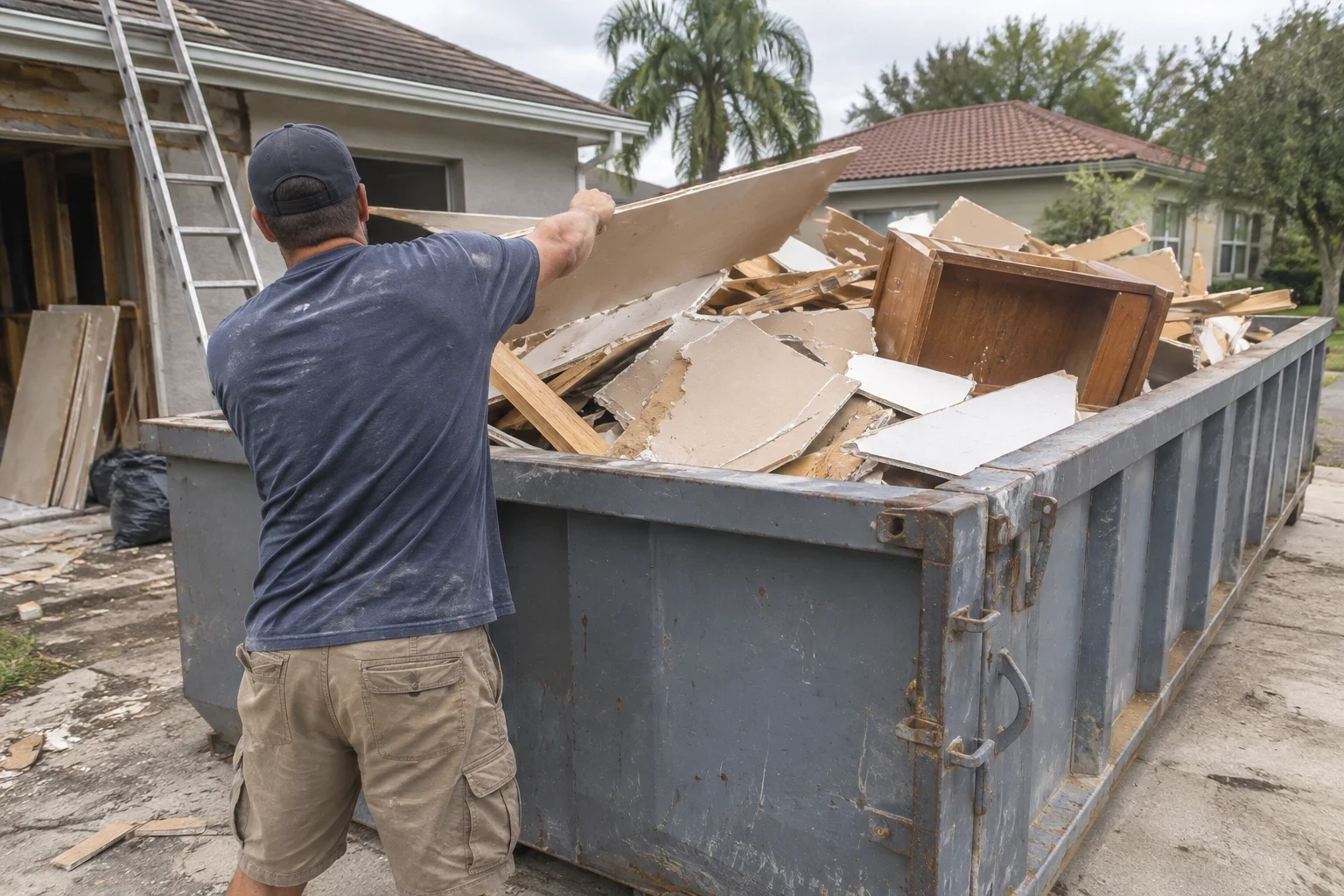
Debris handled from first load to final pickup
Construction debris removal is for projects that produce more waste than a trash can or a pickup truck can manage: a kitchen gutted to the studs, a reroof, a garage turned into living space, a new lanai. We deliver a roll-off dumpster sized to the job, you or your crew fill it as the work moves along, and we haul it away when you are finished or swap it when it is full.
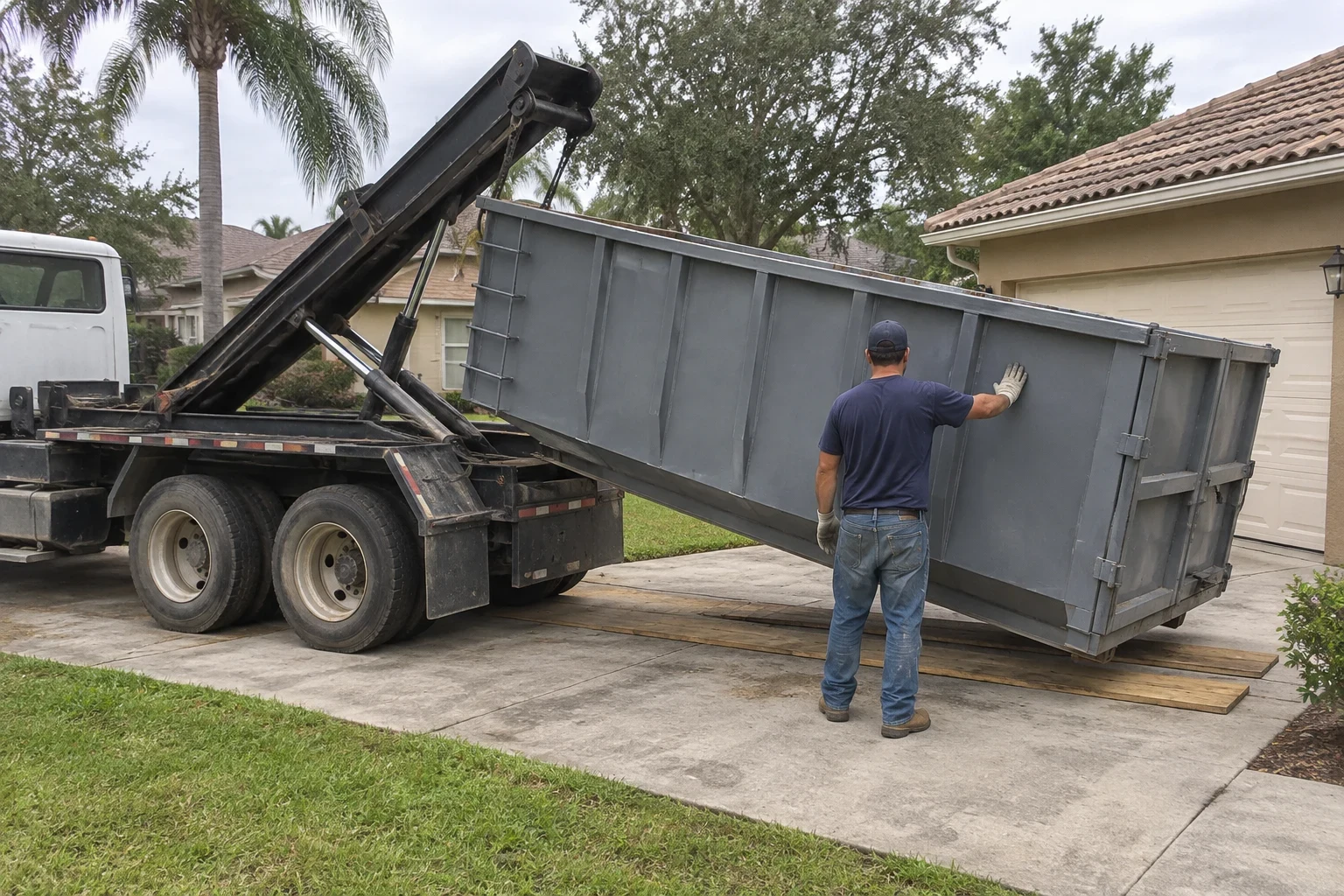
The container may sit on your property for days or weeks, so where it goes matters as much as what goes in it. Before delivery we talk through placement with you, set the dumpster on boards to spread its weight, and keep the truck off lawns, sprinkler heads and planted beds. You know what is arriving, when, and exactly where it will sit.
Contractors and roofers use the same service on their job sites, and the care for the property stays the same whoever is filling the container. For a household cleanout without construction waste, our Roll Off Dumpster Rental page covers that work.
What the service includes
Sizing by material, not just volume
Drywall and framing lumber take up space but weigh little. Tile, concrete and roofing shingles get heavy fast. We ask what you are tearing out so the dumpster suits both the volume and the weight, which helps you avoid overweight charges.
Boards under the container
We lay wood boards under the roll-off's rails before it touches your driveway. Concrete and pavers hold up far better when the load is spread out instead of pressed into a few points.
A placement plan
We agree on a spot that keeps the garage usable and the walkway open, with the truck clear of trees, irrigation and septic areas. If neighborhood rules or the street layout limit where a container can sit, we sort that out before delivery day.
Swaps on longer projects
On a multi-week remodel or new build, we pick up the full container and set an empty one in the same spot. The crew keeps working, and debris never ends up piled on the ground.
A tidy finish
At final pickup we lift the boards and look over the area, picking up stray nails, shingle grit and small scraps before we leave.
Signs your project needs a dedicated debris container
- Demolition is on the schedule
- Tearing out cabinets, flooring, a bathroom or interior walls creates more debris than most people expect. Planning for it before the first wall comes down keeps the house and yard clear.
- Your roof is being replaced
- Old shingles, underlayment and flashing come off in heavy layers. A container placed close to the roofline lets the crew drop debris straight in rather than onto your shrubs.
- Debris is piling up on the lawn
- Under Florida summer heat, a pile on the grass can kill the turf beneath it within days and invites pests. If materials are already sitting outside, it is time for a container.
- Weekly trash pickup can't keep up
- Curbside service is not meant for drywall, lumber or concrete. When your bins are full of job scraps, the waste needs its own pickup.
- Hauling was left off the contractor's bid
- Some bids leave debris disposal to the homeowner. We can work with you directly or coordinate with your crew so everyone knows when the container arrives and leaves.
How a debris removal job runs
- 1
A conversation about the project
When you phone, we ask what is being removed, roughly how much, and how long the work will run. That tells us the right yard size and lets us give you a quote that spells out the rental period and weight allowance.
- 2
Placement agreed before the truck arrives
We settle on the spot and confirm a delivery window. If a car needs moving or a gate needs opening, you will know ahead of time.
- 3
Careful delivery
The driver lays the boards, backs in slowly and sets the roll-off down gently, keeping clear of overhead lines, low branches and soft ground. Before leaving, we show you how the rear door works.
- 4
Loading and swaps
Load evenly and keep debris below the top rim so it travels safely. When it is full or the job is done, phone us and we schedule the pickup or a swap.
- 5
Pickup and a last look
We haul the container away, lift the boards and check the driveway and lawn edges before we go.
What shapes the cost of debris removal
Each project is priced on its own details, and we walk through them when we quote by phone. You hear what is included before anything is delivered, so the final bill matches the conversation.
- Container size
- Larger yard sizes cost more to haul and dispose of. Choosing the right size at the start is usually less expensive than ordering a second container halfway through.
- Weight and material type
- Concrete, tile, dirt and shingles weigh far more than drywall or lumber. Disposal is charged partly by weight, so heavy debris affects the price and sometimes the container we recommend.
- Rental length and swaps
- A weekend bathroom tear-out and a three-month addition are priced differently. Each swap on a long project is an added haul.
- Placement and access
- Tight driveways, long setbacks or a street placement that needs city approval can add steps. We point these out when we quote.
- Items needing separate handling
- Mattresses and appliances may carry extra disposal fees. Paint, solvents and batteries cannot go in the container at all.
Questions about construction debris removal
- Will the dumpster damage my driveway?
- A loaded container puts real weight on a driveway, which is why we set boards under it as standard practice. The boards spread the load over a wider area. We also steer clear of paver edges, soft ground and septic areas, and we agree on the spot with you first.
- Can roofing shingles go in with other remodeling debris?
- Usually, yes. Tell us shingles are part of the load, because their weight changes the size we recommend. A project heavy in concrete or tile may call for a smaller container that can carry the weight safely.
- What can't go in a construction debris dumpster?
- Paint, solvents, oils, batteries, propane tanks and anything containing asbestos stay out. Tires and appliances may need separate handling. If you are unsure about an item, ask us before it goes in.
- Do I need a permit for the container?
- On your own driveway, generally not. If the container has to sit on a public street, the city may require a permit, and some neighborhoods have their own rules. We will tell you what to check before delivery.
- My contractor is ordering the dumpster. Will I still know what's happening?
- Yes. We keep the household informed of delivery and pickup times even when the crew places the order, so nobody is surprised by a truck in the driveway.
- What happens if it rains while the dumpster is out?
- Afternoon storms can soak an open load, and wet drywall and insulation weigh much more. Pulling a tarp over the container at the end of each workday keeps the weight down.
Plan the cleanup before the first wall comes down
Tell us what you are removing and where the container should sit. We will recommend a yard size, explain the quote and set a delivery date that fits your schedule.